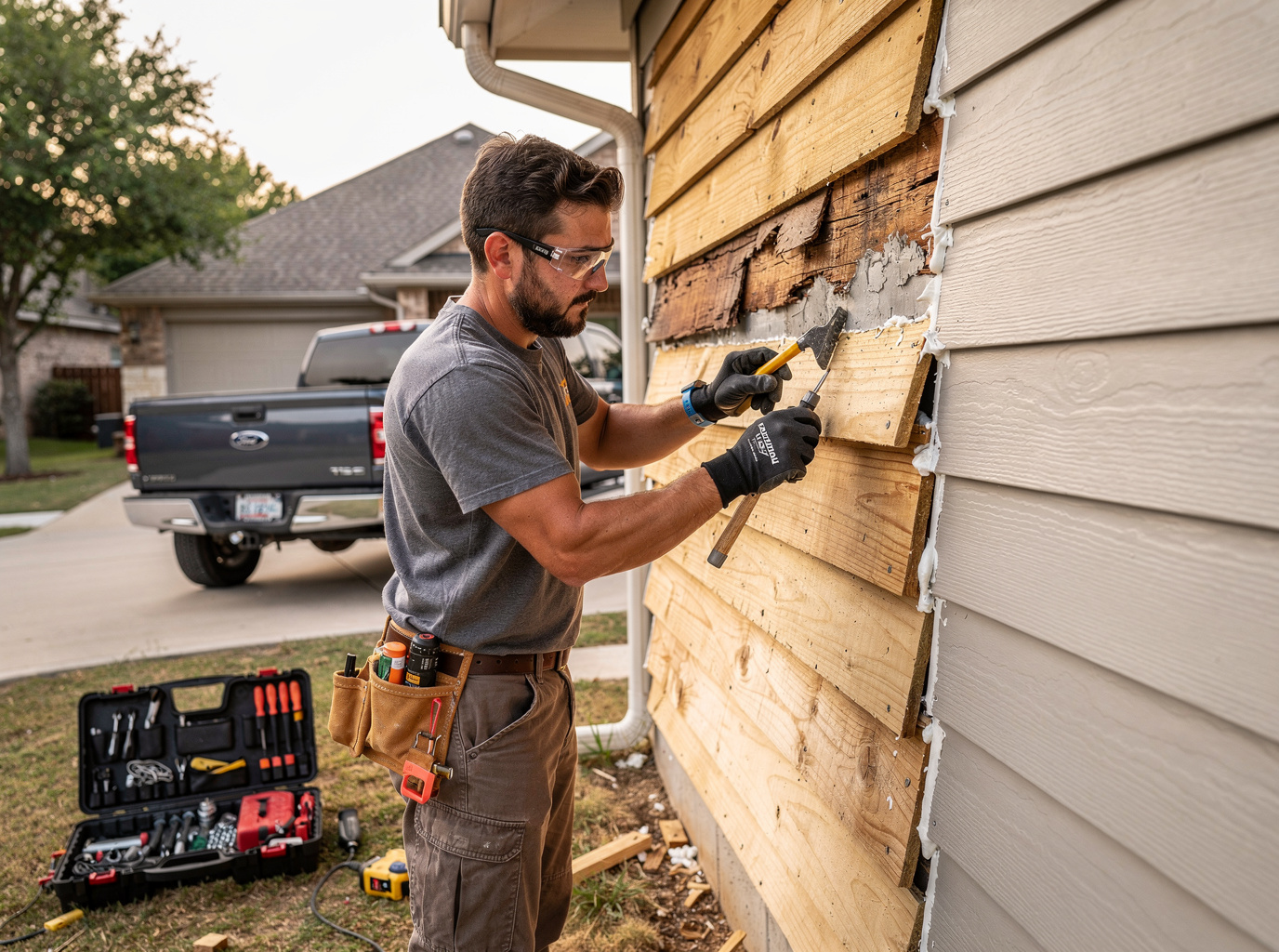
Wood siding in Round Rock homes often suffers from moisture intrusion due to the area's humid subtropical climate with hot summers and mild winters. Older housing stock in neighborhoods like Old Town and Downtown Round Rock features original wood exteriors that expand and contract with temperature swings, creating gaps where water enters. Providers familiar with these conditions inspect for hidden rot behind boards, especially near window frames and rooflines where runoff concentrates during heavy summer rains.
Homes in Teravista and Forest Creek developments commonly use cedar or pine siding that requires targeted patching rather than full replacement when damage stays localized. Local providers check for proper flashing around penetrations and ensure ventilation prevents trapped humidity. Work near landmarks like Old Settlers Park or Dell Diamond often involves coordinating with HOA guidelines in Williamson County to maintain neighborhood standards without altering original materials.
Connecting with independent providers means getting assessments that account for soil movement in the clay-heavy terrain around Pflugerville and Cedar Park, which can shift foundations and stress siding joints. These operators focus on matching grain and finish to existing wood to avoid visible patches after repair.
Seasonal Considerations
Summer humidity accelerates mold growth on damaged wood, while winter temperature drops can crack previously repaired sections if expansion joints were not addressed. Providers recommend scheduling inspections before peak storm seasons to catch issues early in areas like Round Rock Premium Outlets vicinity where commercial runoff affects nearby residences.
Technician insight
In Round Rock, the thing that catches most people out with Wood Siding Repair is how quickly mild winter rains soak into cedar boards on 1980s homes in Old Town, hiding rot until it spreads to sheathing because the clay soil holds moisture against the foundation.
Hidden Rot Behind Teravista Siding
A homeowner noticed soft spots on wood siding after summer storms. The provider found extensive rot from poor flashing near a second-story window. They replaced affected boards, improved drainage, and sealed joints to match the home's original look. The siding now withstands the area's humidity without further issues.
How it works
- 1
Initial Assessment
Providers evaluate the siding condition, focusing on moisture damage common in Round Rock's climate.
- 2
Damage Mapping
They identify affected boards and underlying issues like rot in neighborhoods such as Old Town.
- 3
Material Matching
Local wood types are selected to blend with existing siding on Williamson County homes.
- 4
Repair Execution
Boards are replaced or patched with attention to flashing and ventilation needs.
- 5
Final Inspection
Work is reviewed for durability against hot summers and mild winters.
Pricing
Costs vary by extent of hidden rot and access in older Round Rock homes; providers supply detailed quotes after inspection.