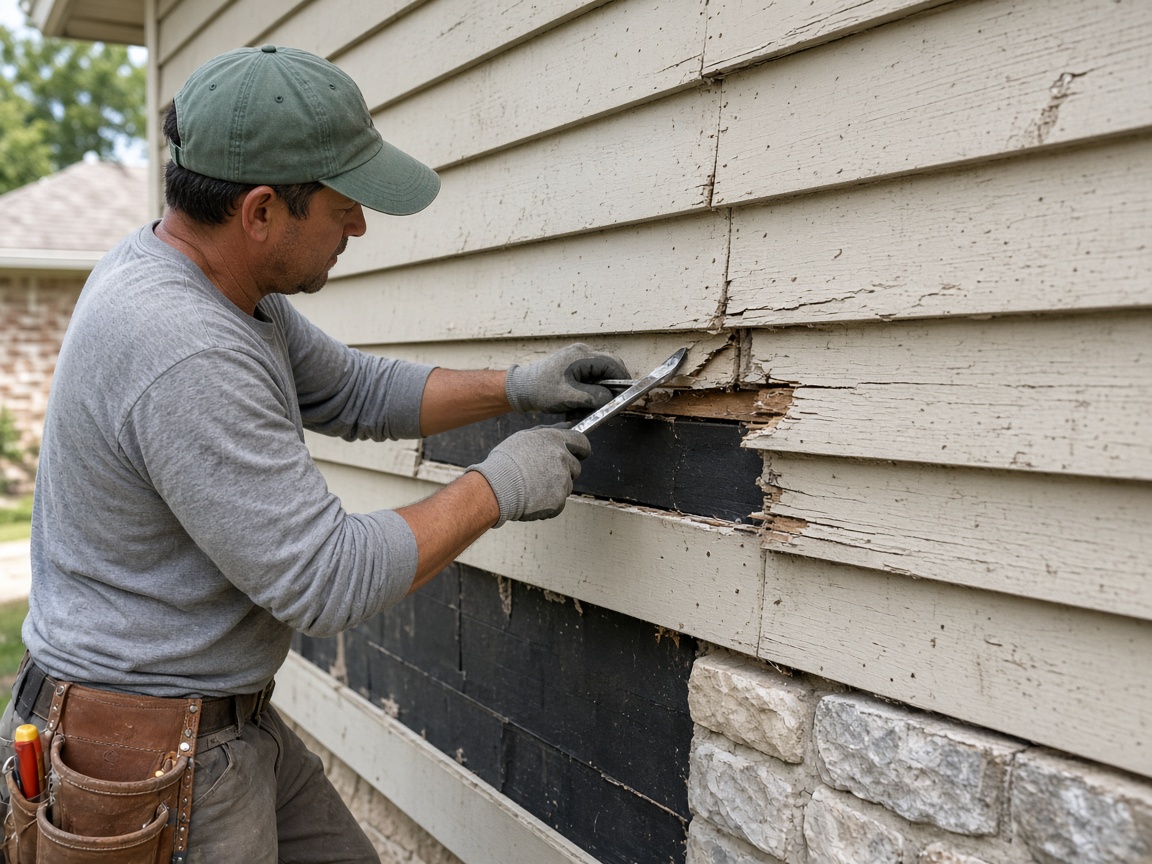
Round Rock's humid subtropical weather brings hot summers that trap moisture against siding, especially on older wood-clad homes in Downtown Round Rock and Old Town where original construction often lacks modern vapor barriers. Clay-heavy soils around Forest Creek and Teravista slow drainage after storms, pushing water up behind lower courses and causing hidden rot that spreads quickly once temperatures climb. Providers connected through this service routinely check for these patterns before any surface fix, because simply replacing a few boards without addressing the moisture path leads to repeat failures within a season.
Newer vinyl and fiber-cement installations around the Round Rock Premium Outlets and near Dell Diamond face different problems: expansion gaps close in extreme heat, and hail from Williamson County thunderstorms cracks panels that then allow wind-driven rain to enter. Matching profiles and colors from local suppliers matters here, since big-box stock often differs in thickness and fade resistance from what was installed ten or fifteen years ago. Edge cases include homes backing Old Settlers Park where tree cover keeps siding damp longer, requiring extra sealant attention at joints.
Pflugerville and Cedar Park spillover traffic means many Round Rock repairs involve coordinating with city permitting for exterior changes on streets visible from major roads. Ignoring small cracks near windows or doors in mild winters can turn into full wall replacement once summer humidity returns. Connected providers focus on targeted section repairs that preserve the rest of the elevation rather than full re-sides unless structural damage is confirmed.
Technician insight
In Round Rock, the thing that catches most people out with Siding Repair is how quickly our clay soils and humid summers push water behind lower boards on north-facing walls in Forest Creek homes. Homeowners often spot peeling paint too late because the rot starts at the bottom plate and travels upward before any exterior sign shows.
Hidden Rot After Summer Rains in Old Town
A homeowner noticed soft spots low on wood siding following repeated storms. Inspection revealed water trapped behind the boards due to poor soil drainage typical of the neighborhood. Affected sections were cut out, rot treated, and new matching wood installed with added flashing at the base. The repair stopped further interior moisture issues without replacing the full elevation.
How it works
- 1
Initial Assessment
Connected provider inspects visible damage, checks for moisture behind siding, and notes material type and age of the home in the specific Round Rock neighborhood.
- 2
Material Matching
Source matching boards, panels or trim from local suppliers to blend with existing siding on homes in Old Town or Teravista.
- 3
Targeted Repair
Remove damaged sections, treat any rot, improve drainage or sealing, and reinstall or replace affected areas while protecting surrounding surfaces.
- 4
Final Check
Verify repairs hold after a rain event and confirm no new moisture paths remain before completing the job.
Pricing
Pricing depends on damage extent, material type and access; obtain direct quotes from connected independent providers.