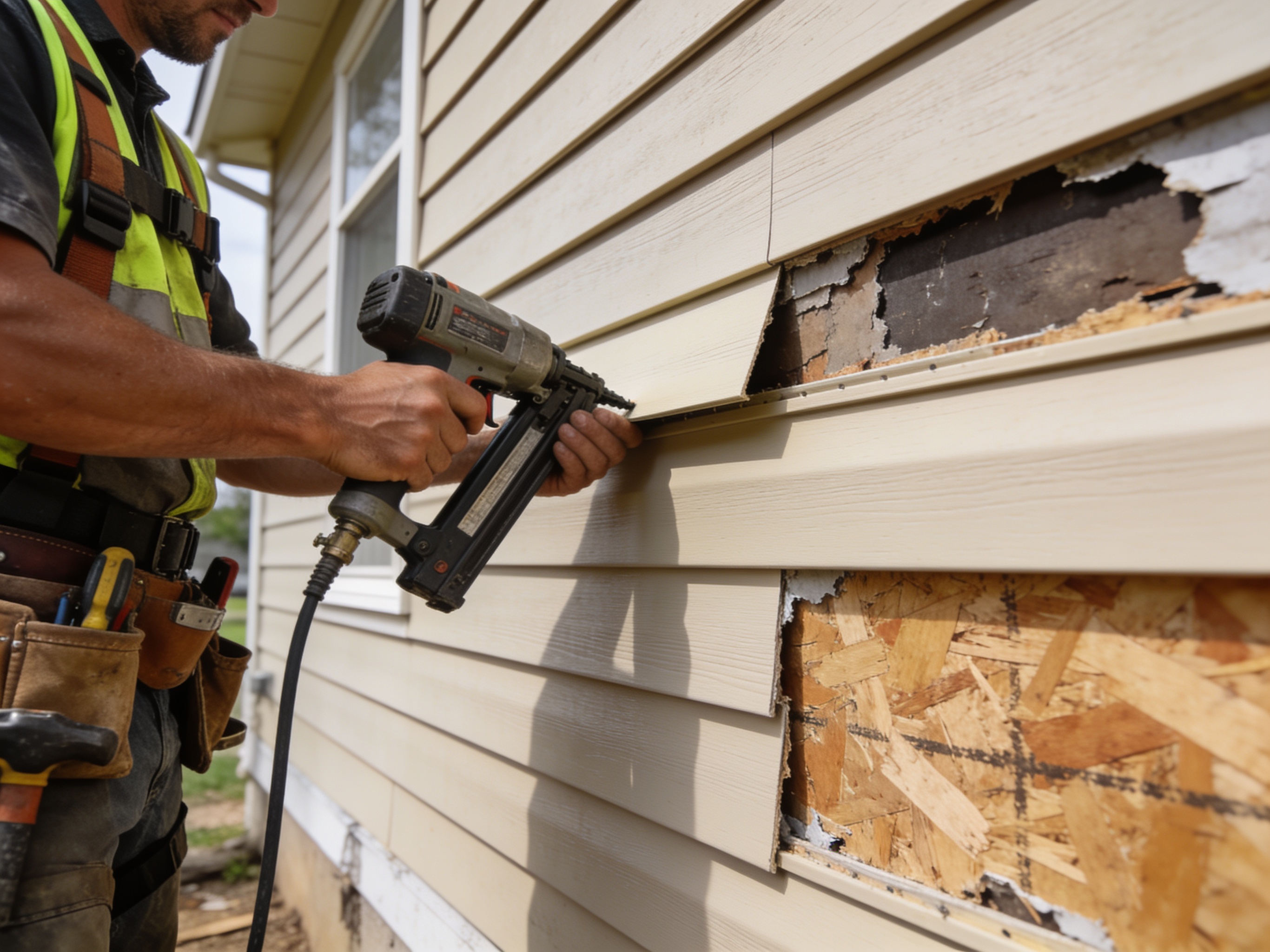
Round Rock homes built before the 1990s in Old Town and Downtown Round Rock often feature original wood siding that has absorbed moisture from repeated humid summers. Replacement here requires checking for hidden rot along the bottom courses and around window openings where water has wicked behind the boards. Providers we connect you with typically pull full sections rather than patching so the new material matches the expansion and contraction cycles common in Williamson County.
Newer neighborhoods such as Teravista and Forest Creek frequently use fiber cement or vinyl that can fail at seams after ten to fifteen years of direct sun and temperature swings. When replacing these systems, local crews pay special attention to proper ventilation behind the siding to prevent moisture buildup during mild winters when dew points stay high. Work near Dell Diamond or Old Settlers Park also means coordinating around weekend events so equipment and debris removal do not interfere with traffic.
Austin and Pflugerville homeowners sometimes request the same material upgrades, but Round Rock soil and drainage patterns differ enough that installers must adjust flashing details at grade. Providers familiar with Gattis School Road addresses know how to tie new siding into existing stucco or brick returns without creating new water entry points. This attention to transitions prevents callbacks once the first heavy summer rain arrives.
Code updates in Williamson County now require enhanced weather barriers on many replacement jobs. Local providers inspect sheathing for delamination caused by past leaks before installing new underlayment. They also verify that weep holes and drainage planes remain clear so water exits rather than pools behind the finished wall.
Technician insight
In Round Rock, the thing that catches most people out with siding replacement is the hidden rot along the bottom plate in Old Town homes where clay-heavy soil holds moisture right against the foundation. One summer of missed flashing detail and the new siding starts cupping within two seasons.
Teravista Home Siding Replacement
Fiber cement panels on a Teravista house showed buckling at the seams after repeated hot summers. Providers found failed housewrap and water trapped behind the bottom row. They removed the damaged sections, replaced the wrap with a higher-perm product, and reinstalled matching panels with improved drainage. The home now sheds water properly during humid months.
How it works
- 1
Initial Assessment
Providers we connect you with visit the property to measure all elevations, note existing material type, and identify moisture issues common in Round Rock humidity.
- 2
Material Selection and Quote
Homeowners receive options suited to local heat and older home framing, with clear explanations of how each performs in Williamson County conditions.
- 3
Preparation and Removal
Old siding is stripped, sheathing is checked for damage, and any rotted areas around windows or at grade are addressed before new underlayment goes on.
- 4
Installation and Detailing
New siding is installed with proper overlaps, flashing, and ventilation to handle summer expansion and winter moisture cycles.
- 5
Final Walkthrough
The completed work is reviewed with the homeowner, including checks at seams, corners, and transitions near brick or stucco.
Pricing
Pricing depends on material choice, home size, and condition of existing walls; obtain quotes from connected local providers for accurate estimates.